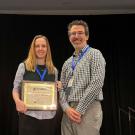
A multidisciplinary UC Davis team, including the veterinary school's Dr. Pam Lein, received the NIH Director’s New Innovator Award to study genes unique to humans that may contribute to neurodevelopmental disorders including autism.
UC Davis researchers announce in the Proceedings of the National Academy of Sciencesthis week a breakthrough in understanding which cells afford optimal protection against Salmonellainfection—a critical step in developing a more effective and safe vaccine against a bacterium that annually kills an estimated one million people worldwide.
Ancient dogs arrived in the Americas alongside humans more than 10,000 years ago but were later wiped out by European colonization, a new study suggests.
The latest newsletter from the UC Davis Clinical and Translational Science Center highlights collaborations among researchers from human and veterinary medicine. Articles include how clinical trials with animal patients speeds translation to improved care for people, partnerships in human-animal eye research, and new hope from novel canine cancer therapy treatments and feline stem cell therapy for an oral inflammatory disease. Read more
A first-ever tissue implant to safely treat a common jaw defect, temporomandibular joint dysfunction, has been successfully tested in animals by researchers from UC Irvine and UC Davis.
Rhesus macaque monkeys infected in utero with Zika virus develop similar brain pathology to human infants, according to a report by researchers at the California National Primate Research Center and the UC Davis School of Veterinary Medicine published June 20 in Nature Communications.