Dr. Simone Stoute, professor in the Department of Population Health & Reproduction and branch chief of California Animal Health and Food Safety Laboratory - Turlock, was recently named the Scientist of the Year by the Pacific Egg and Poultry Association (PEPA).
In recognizing Dr. Stoute at the PEPA annual convention, poultry veterinarian Dr. Mark Bland praised her work, noting that she has an excellent reputation for her diagnostic acumen, is a leader in the laboratory, and is recognized by industry as a highly effective communicator.
The university's Academic Senate and Federation have presented their top academic honors for 2024, and the faculty recipients are being showcased not just for their expertise, but also for their teaching, mentorship and public service. In all, 15 faculty members have received awards from the two groups at UC Davis.
Honorees this year include three from the School of Veterinary Medicine: Health Science Clinical Professor Kirsten Gilardi, Professor in Cooperative Extension Pramod Pandey, and Health Sciences Associate Clinical Professor April Choi.
El Simposio Equine Essentials de la Facultad de Medicina Veterinaria de la UC Davis acogió el regreso de un evento público de educación equina prepandémico, que esta vez ofreció temas en inglés y español. El evento fue organizado por miembros del Club de Medicina Equina, un grupo de estudiantes de veterinaria de la UC Davis que representan al capítulo estudiantil local de la Asociación Americana de Veterinarios Equinos.
The UC Davis School of Veterinary Medicine’s Equine Essentials Symposium welcomed the return of a pre-pandemic public equine education event, this time offering tracks in both English and Spanish. The event was organized by members of the Equine Medicine Club, a group of full-time UC Davis veterinary students that represent the local student chapter of the American Association of Equine Practitioners.
The UC Davis School of Veterinary Medicine (SVM) is pleased to announce that Dr. Michael Mison has been named Associate Dean for Veterinary Medical Center Operations/Chief Veterinary Medical Officer (CVMO) of the William R. Pritchard Veterinary Medical Teaching Hospital (VMTH), effective March 1, 2024. Dr. Mison, a board-certified surgeon, will also serve as a professor in the hospital’s Soft Tissue Surgery Service.
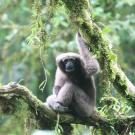
Skywalker gibbon couples wake up each morning and sing to each other, their voices echoing across the forest canopy of their home. The primate’s endearing love song helped scientists confirm what was formerly a strong hunch: Myanmar has the largest population of endangered Skywalker gibbons on Earth.
During a lunch talk hosted by the UC Davis Chapter of Veterinarians as One Inclusive Community for Empowerment (VOICE) earlier this month, Gina Davis B.S. '95, DVM '97 shared her journey as an African American woman navigating the veterinary profession. She took attendees of the talk through her career journey, which started with her undergraduate studies and veterinary school at UC Davis, working in private practice, before returning to the UC Davis School of Veterinary Medicine.
Dr. Ronald Jensen, who served 10 years as equine medical director for the California Horse Racing Board through 2005, passed away at his home on February 12. Arrangements for a Celebration of Life are pending.