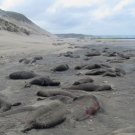
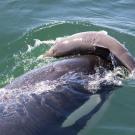
Pathology reports on more than 50 killer whales stranded over nearly a decade in the northeast Pacific and Hawaii show that orcas face a variety of mortal threats — many stemming from human interactions.
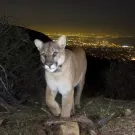
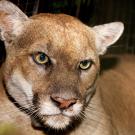
A mountain lion found with burn injuries sustained during California’s Bobcat Fire was released back into the wilderness on the weekend of October 24 after receiving a month-long treatment from the UC Davis School of Veterinary Medicine staff.
Earlier this week, the UC Davis School of Veterinary Medicine and the California Department of Fish and Wildlife announced the joint formation of the Wildlife Disaster Network. The network is already aiding several animals injured in California’s latest wildfires. Network teams throughout Northern California are treating about a dozen animals at various facilities.
The Wildlife Disaster Network is a new partnership between the UC Davis School of Veterinary Medicine and California Department of Fish and Wildlife. It aims to quickly and efficiently mobilize the people and resources needed to aid wildlife affected by wildfire and other disasters.
An orphaned mountain lion cub is at the Oakland Zoo recovering from burn injuries after being rescued from California's Zogg Fire. The zoo staff is working with the UC Davis Veterinary Hospital to treat the cub's wounds.
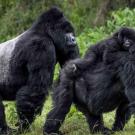
A new survey conducted by Gorilla Doctors shows that mountain gorilla numbers have increased in Bwindi Impenetrable National Park, Uganda, and Sarambwe Reserve, DR Congo. When combined with the 2015-2016 population survey results of 604 mountain gorillas in the Virunga Massif, the total world population of endangered mountain gorillas now stands at 1,063.
Scientists have linked the decline in Arctic sea ice to the emergence of a deadly virus that could threaten marine mammals in the North Pacific, according to a study from the University of California, Davis.
Detection dogs trained to sniff out the scat of an endangered lizard in California’s San Joaquin Valley, combined with genetic species identification, could represent a new, noninvasive sampling technique for lizard conservation worldwide.