The UC Davis Veterinary Medical Teaching Hospital has expanded its Orthopedic Surgery Service to open the Advanced Veterinary Surgery Center. Modeled after human health inpatient/outpatient facilities, the center provides advanced surgical capabilities for animals suffering from injuries or disorders of the bones and joints, while increasing case volume and training capacity.
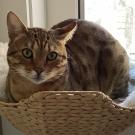
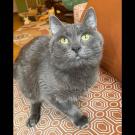
Atlas, a 2-year-old male cheetoh cat (Bengal/ocicat cross), is a fearless daredevil who likes to get into mischief, always wanting to climb to the highest heights he can reach in the house. Unfortunately, those activities caught up with him last May when he became acutely lame after jumping down from an elevated structure at home. X-rays showed a displaced fracture of the right femoral head that would require surgery.
The two most common causes of death in kittens are diarrhea and severe upper respiratory tract infections. Thanks to a Center for Companion Animal Health grant, UC Davis veterinary scientists have made a small discovery that may give veterinarians a better understanding of one of those issues.
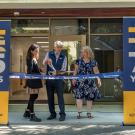
The UC Davis School of Veterinary Medicine held a ribbon-cutting ceremony to celebrate the new Advanced Veterinary Surgery Center. This state-of-the-art facility is set to fully open in April 2024, providing top-notch veterinary surgical care to more companion animals and breaking new ground on surgical innovation. With three operating rooms, a radiology suite, and other advanced features, we aim to reduce wait times for surgeries, train more veterinary students, residents, and fellows, and foster collaborative research opportunities across UC Davis.
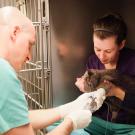
Experimental treatment saved a kitten’s life after he was found abandoned at a Sacramento park suffering from an illness that is usually fatal in cats.
At the recent AVMA annual conference, Dr. Boaz Arzi was recognized for his multifaceted research which focuses on feline chronic gingivostomatitis, maxillofacial fracture management, temporomandibular joint disorders, and regenerative medicine.
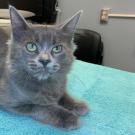
Chunk was just a tiny kitten when he was brought to the UC Davis veterinary hospital where he was enrolled in a CCAH-funded clinical trial studying various treatments for ringworm.