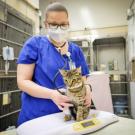
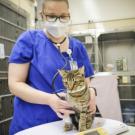
Researchers at the University of California, Davis, have uncovered new details about how a once-deadly coronavirus disease in cats spreads through the immune system. The findings may help scientists better understand long COVID and other long-lasting inflammatory illnesses in people.
When Tommy Ma and Tiffany Pan adopted a 3-month-old Ragdoll kitten named Lychee in 2022, they expected joy, not heartbreak.
“Lychee was a dream come true,” Pan said. “Growing up, I’d never been allowed to have any large pets. Even cats are considered a large pet in my family.”
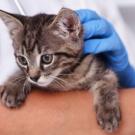
Just weeks after coming home, Lychee fell gravely ill. He began showing signs of feline infectious peritonitis, or FIP, a disease that was once fatal for cats.
Feline infectious peritonitis, or FIP, is a serious and historically fatal disease in cats caused by a coronavirus. It behaves in many ways like severe coronavirus infections in humans, causing widespread inflammation, T cell exhaustion and chronic immune dysfunction. Scientists at the University of California, Davis, have found that mesenchymal stromal cells, or MSC therapy, in combination with antiviral drugs, helped cats’ immune systems recover and reduced systemic inflammation.
Experimental treatment saved a kitten’s life after he was found abandoned at a Sacramento park suffering from an illness that is usually fatal in cats.
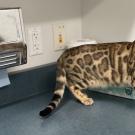
Lily, a 9-month-old female Bengal cat, is now in remission from feline infectious peritonitis (FIP) thanks to clinical trials at the UC Davis veterinary hospital.
Drs. Amir Kol, Krystle Reagan, and Brian Murphy are bringing new hope for cats with feline infectious peritonitis (FIP) with exciting new research and clinical trials at UC Davis.
Scientists from the UC Davis School of Veterinary Medicine have launched new clinical trials focused on improving treatments for feline infectious peritonitis, or FIP, and are currently enrolling patients at the UC Davis veterinary hospital.