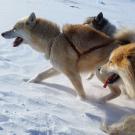
Inuit sled dogs have changed little since people migrated with them to the North American Arctic across the Bering Strait from Siberia, according to researchers who have examined DNA from the dogs from that time span.
Congratulations to Maya Schlesinger, Class of 2022, who was recently awarded second place for her student poster at the annual conference of American College of Veterinary Pathologists.
Food authentication is becoming increasingly important, as contamination and fraud can occur at any point within a supply chain. Professor Bart Weimer has collaborated with IBM researchers and industry partners to use metagenomics, analytics and cloud to build new ways to authenticate the composition of raw materials.
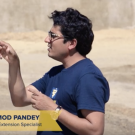
Dr. Pramod Pandey, a faculty member and cooperative extension specialist at the UC Davis School of Veterinary Medicine, focuses on better ways to manage dairy waste material for both large and small farms.
In a paper out today in Cell Host & Microbe, a collaborative team led by UC Davis School of Veterinary Medicine researcher Jeroen Saeij identified one of the T. gondii genes responsible for how well the parasite survives in a host.
Four residents from the UC Davis veterinary hospital recently took home research awards from the 2019 American College of Veterinary Internal Medicine (ACVIM) annual conference. As one of the largest veterinary conferences in the world, ACVIM receives resident research submissions from some of the best and brightest young minds in veterinary medicine.
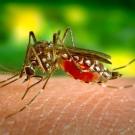
After collecting data and comparing it with every known mammal and bird species on Earth, scientists from the University of California, Davis, have identified wildlife species that are the most likely to host flaviviruses such as Zika, West Nile, dengue and yellow fever. Flaviviruses are known to cause major epidemics and widespread illness and death throughout the world.
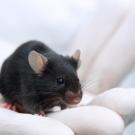
Hundreds of new genes linked to blindness and other vision disorders have been identified in a screen of mouse strains. Many of these genes are likely important in human eye vision and the results could help identify new causes of hereditary blindness in patients. The work is published Dec. 21 in Nature Communications Biology. The research team was led by Dr. Bret Moore, resident at the UC Davis Veterinary Medical Teaching Hospital.
There’s gold in those old databases. Analyses of genomic data often miss a large amount of information, but genome scientists at UC Davis have now created an automated analysis pipeline to dig out this hidden information. In a new study published in the journal GigaScience the researchers mine a huge marine microbial dataset from the Microbial Transcriptome Sequencing Project (MMETSP) to find new results.