UC Davis is establishing a new center designed to develop ways to prevent long-term brain damage in humans when poisoned by organophosphate chemical nerve agents or pesticides.
The UC Davis School of Veterinary Medicine is one of five partner institutions with the National Institute of Antimicrobial Resistance Research and Education to receive a $1.5 million cooperative agreement award from the U.S. Food and Drug Administration Center for Veterinary Medicine to support a project designed to improve antibiotic stewardship by prioritizing the most significant diseases in food animal production and identifying alternative treatment strategies.
The Centers for Disease Control and Prevention recently awarded a new 5-year, $10 million grant for UC Davis to continue its work with six other research universities in research, training, and outreach on vectors, which are organisms that transmit diseases from an animal to a human or another animal.
Seven years of carefully planned habitat restoration on private land in the Mojave Desert have yielded hope for the persistence of the endangered Amargosa vole.
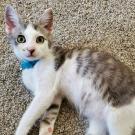
With its new Access To Care Program, the UC Davis veterinary hospital was able to save Rupert, a male domestic shorthair kitten, and help find him a forever home.
Scientists from the University of California, Davis created network-based models to prioritize novel and known viruses for their risk of zoonotic transmission, which is when infectious diseases pass between animals and humans.
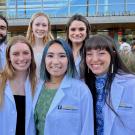
Families, friends, faculty and staff gathered at the UC Davis Mondavi Center to welcome 150 new students into the UC Davis School of Veterinary Medicine Class of 2026 on August 19.
Dr. Peter Schantz, 82, of Atlanta, GA died July 26, 2022, of Alzheimer’s disease. A veterinarian and epidemiologist, Dr. Schantz devoted his professional life to the control and eradication of animal-to-human (zoonotic) diseases.
Fertility is finite for mammalian females. From birth, females possess a limited number of primordial follicles, collectively called the ovarian reserve. Within each follicle is an oocyte that eventually becomes an egg. But with age, the follicles in the ovarian reserve decrease.
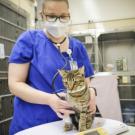
The Dentistry and Oral Surgery Service at the UC Davis veterinary hospital is opening a monthly Stomatitis Clinic to better serve patients suffering from this oral disease and provide them with cutting-edge diagnostic and therapeutic options.
Scientists from the UC Davis School of Veterinary Medicine have launched new clinical trials focused on improving treatments for feline infectious peritonitis, or FIP, and are currently enrolling patients at the UC Davis veterinary hospital.