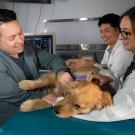
“We were devastated to learn our beloved Chihuahua Pixie, had leukemia," said Pixie's owner. "Things did not look good, but with the help of the doctors at the UC Davis veterinary hospital, we decided on chemotherapy treatment."
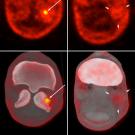
Positron emission tomography (PET) scanning technology has now been in place at the UC Davis veterinary hospital for two years. In 2016, UC Davis became the first veterinary hospital in the world to implement an equine PET scanner, and has since added a small animal scanner in 2018.
Roxie, a 12-year-old female Shih Tzu, was having trouble moving her hind legs, to the point of becoming partially paralyzed. After being referred to the Neurology/Neurosurgery Service at the UC Davis veterinary hospital, an evaluation of Roxie showed her to have an arched posture, avoided moving her neck, and had some incoordination in her hind legs.
Your dog is a member of the family, right? So when that family expands to include a new little human member, your pup is one of the many "loved ones" you'll need to prepare for the arrival of a baby.
There are recent concerns about reports of heart disease in some dogs eating commercial diets. UC Davis Nutrition Support Services provides this statement to offer guidance to owners/veterinarians regarding the nutritional aspects of this condition and best practice information regarding blood testing for taurine status.
The U.S. Food and Drug Administration recently issued an alert about reports of canine dilated cardiomyopathy (DCM) in dogs eating certain pet foods containing peas, lentils, other legume seeds, or potatoes as main ingredients. UC Davis is leading the investigation between these dog diets and heart disease.
Pet foods containing peas, lentils, other legume seeds or potatoes as main ingredients may be linked to cases of canine dilated cardiomyopathy (DCM) in dogs, according to an alert to pet owners this week from the Food and Drug Administration.
Ancient dogs arrived in the Americas alongside humans more than 10,000 years ago but were later wiped out by European colonization, a new study suggests.
Pet owners have lower blood pressure and less stress, and they exercise more, among other benefits. But pets can sometimes also pass on diseases. People magazine highlights how taking good care of your pet will help prevent the spread.