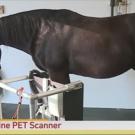
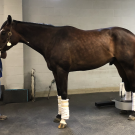
On April 14, 2021, local television morning show "Good Day Sacramento" visited the UC Davis Center for Equine Health. Dr. Mathieu Spriet showcased the latest in equine PET scanning technology.
On April 6, 2021, equine specialists from the UC Davis School of Veterinary Medicine's Center for Equine Health, Veterinary Medical Teaching Hospital, and the California Animal Health and Food Safety Laboratory joined with the California Department of Food and Agriculture to present “Update on Equine Herpesvirus Myeloencephalopathy for Horse Owners.”
On March 26, 2021, equine specialists from the UC Davis School of Veterinary Medicine's Center for Equine Health, Veterinary Medical Teaching Hospital, and the California Animal Health and Food Safety Laboratory joined with the California Department of Food and Agriculture to present “Update on Equine Herpes Myeloencephalopathy for Equine Practitioners.”
When Bella, a 7-year-old Thoroughbred maiden mare, went into labor last month, her owners Tom and Nicole Bachman were excited and sprang into action. But they soon realized something was terribly wrong.
New research has reported the warmblood fragile foal syndrome (WFFS) allele in 21 breeds. The study, an international collaboration led by UC Davis Veterinary Genetics Laboratory Director Rebecca Bellone, screened more than 4,000 horses from 38 different horse breeds in the United States and Europe.
One year ago, on December 12, 2019, Santa Anita Park installed the world’s first MILE-PET device, a positron emission tomography (PET) scanner specifically designed to image standing racehorses. This installation, one of several measures to reduce breakdowns at the racetrack, received a lot of attention at a time when Santa Anita was just coming out of a challenging racing season, with a cluster of horse fatalities early in the year.
The UC Davis veterinary hospital’s Equine Reproduction Service has a newly renovated clinical teaching and research space at the school’s Center for Equine Health. Dean Michael Lairmore, Executive Associate Dean John Pascoe, and Executive Assistant Dean Mary McNally officially unveiled the newly renovated space, which includes four custom-designed stocks and all new flooring. The Equine Reproduction Service team, led by Service Chief Dr. Ghislaine Dujovne and newly acquired faculty member Dr. Pouya Dini, also has a new student meeting space and expanded laboratory as part of the renovation.
Georgia, an 18-year-old warmblood mare, was brought to the UC Davis veterinary hospital after a recent change of ownership. The previous owners disclosed she had been treated medically for chronic endometritis (inflammation of the uterine lining) over the past several years without resolution of the condition.
Researchers at the UC Davis School of Veterinary Medicine have identified a genetic cause for the fatal condition equine familial isolated hypoparathyroidism in Thoroughbreds, marking the first genetic variant for hypoparathyroidism identified in any domestic animal species. Additionally, this is the first widely available genetic test for Thoroughbreds.