Latest News

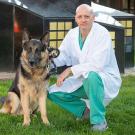
Pet Health Advocate: The Revolutionary Work of Dr. Boaz Arzi

Dr. Boaz Arzi, professor and chief of the Dentistry and Oral Surgery Service, has been treating patients and conducting research for 18 years. He works extensively with stem cell therapy, to help pets have longer and healthier lives.

When it comes to cancer, Dr. Arzi is optimistic that stem cell therapy is going to be a big part of pet cancer treatment, either in the delivery of drugs or by regenerating organs or other structures in the body that have been damaged by chemotherapy or radiation.

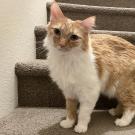
Neurosurgery Discovers Cause of Cat’s Seizures

“Case of the Month” – February 2025


Cub, a 2-year-old orange domestic longhair cat, was far too young to be acting so lethargic last May. He was sleeping more and was less active than the other cats in the household. His owner, Grace Jesensky, also noticed his breathing was abnormal, and his primary veterinarian suspected he had asthma.

Avian Flu Grand Rounds: A Summary

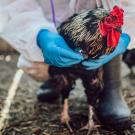
With approximately 2,000 registered attendees, members of the veterinary and human health communities, scientists, media, policymakers, general public and others showed their concerns about avian flu by tuning into the February 19 UC Health Grand Rounds. The one-hour, online session featured three experts from the UC Davis School of Veterinary Medicine and one from UC Davis Health.

Killing H5N1 in Waste Milk — An Alternative To Pasteurization

Pasteurization is the only widely recognized method of killing H5N1, the virus that causes bird flu, in milk. However, pasteurization can be expensive and fewer than 50% of large dairy farms pasteurize waste milk.

Waste milk includes colostrum, the first milk after calving; milk from cows treated with antibiotics or other drugs; or any other factor that can make milk unsuitable and unsellable for human consumption. On farms, raw waste milk poses a potential risk of spreading avian flu, which so far has been confirmed in dairy cattle in 16 states.  

CDFA Public Notice Regarding H5N9 Strain of Avian Influenza

Highly Pathogenic Avian Influenza (Bird Flu) H5N9 Strain 
Detected for the First Time in California, A Different Strain than H5N1

A commercial duck flock in Merced County, confirmed to have H5N1 bird flu on December 14, 2024, received secondary testing and the final report on January 13, 2025 confirmed the presence of a different, additional strain of bird flu---H5N9. This was reported to the World Organization for Animal Health (WOAH) per protocol and published on January 24, 2025.


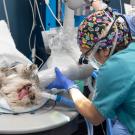
UC Davis Launches Neurosurgery Specialty Service


The UC Davis veterinary hospital has launched a Neurosurgery Specialty Service aimed at adapting state-of-the-art surgical solutions to complex neurological conditions.

This new service offers state-of-the-art neurosurgical interventions and clinical trials, including:

Specialized Eye Surgery Restores Dog’s Vision

“Case of the Month” – January 2025


When their dog Tashi started looking around aimlessly recently, owners Jerry and Arlet Nordeen thought something might be wrong with their beloved 7-year-old Shih-Tzu. When this progressed into bumping into furniture and being hesitant to jump, they took her to see a veterinary ophthalmologist who diagnosed her with detached retinas in both eyes which was taking her vision.

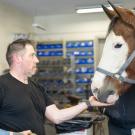
UC Davis Welcomes New Farrier


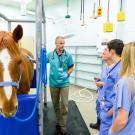
Lance Yohe, CJF, is the new farrier for the UC Davis veterinary hospital’s Large Animal Clinic. Yohe has been a farrier for more than 30 years. He completed his farrier education at the Eastern School of Farriery in 1993 and became a Certified Farrier (2014) and a Certified Journeyman Farrier (2015) through the American Farrier’s Association (AFA).

An active member of AFA since 2008, Yohe served as the regional director from 2017-23 and on the executive board from 2017-22. He also served as director and vice president of the Western States Farrier Association from 2008-16.

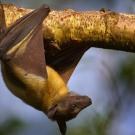
The Hunt Narrows for Ebolavirus Hosts

Bats are widely recognized as the primary hosts of filoviruses, such as Ebola, yet the specific host species of ebolaviruses are not definitively known. In a study led by the University of California, Davis, and the Albert Einstein College of Medicine (Einstein), scientists have developed a new tool to narrow down potential host species of filoviruses and better prioritize wildlife surveillance. The research is part of global efforts to prevent viral spillover between animals and humans.

Alumni Spotlight - Dr. Daniela Yuschenkoff

From growing up a 3-block walk to the San Francisco Zoo and going on “stroller safaris” with her family, to becoming a Board-Certified Specialist in Zoological Medicine™, Dr. Daniela Yuschenkoff’s career has recently come full circle. It was a proud moment for Dr. Yuschenkoff finding out she had passed the rigorous, 2-day exam. After over 3 years of preparation and 6 weeks of serious studying, she claimed that those two days were the “smartest I’ll ever be!”

Dr. Nicola Pusterla Wins Equine Research Award


Dr. Nicola Pusterla recently won the Boehringer Ingelheim Animal Health Advancement in Equine Research Award, given at the American Association of Equine Practitioners annual meeting.

The Boehringer Advancement in Equine Research Award was launched in 2011 to support veterinary research that results in practical applications for insights into important equine infectious and noninfectious diseases.