Sometimes, people are just in the right place at the right time. Thankfully for Aika, neurologist Dr. Christine Toedebusch happened to be in the Emergency Room at the UC Davis William R. Pritchard Veterinary Medical Teaching Hospital (VMTH) when the 5-year-old corgi arrived. While she was checking on another patient, Dr. Toedebusch noticed Aika from across the room.
A recent publication in the Journal of the American Veterinary Medical Association marks an important contribution to radiation-safety understanding in veterinary imaging. The lead author of the review is Lisa Carstens, a registered veterinary technician at UC Davis.
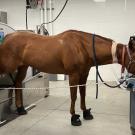
An extremely specialized equine surgery performed by only about a dozen veterinarians nationwide is now available at UC Davis. Thanks to the addition of Dr. Carter Judy to the faculty, as well as a dedicated large bore equine CT scanner, the UC Davis William R. Pritchard Veterinary Medical Teaching Hospital (VMTH) now offers foraminotomy surgery for horses with cervical foraminal stenosis—a narrowing of an intervertebral opening where the limb nerve root exits the spinal column.
Four years ago, Joe Juice, a then 15-year-old American Quarter Horse gelding, had a sialolith removed from the right side of his face at the William R. Pritchard Veterinary Medical Teaching Hospital (VMTH). He recovered quickly and returned to his role as a member of the UC Davis Center for Equine Health’s (CEH) teaching herd.
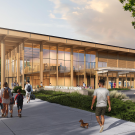
The University of California, Davis, School of Veterinary Medicine today announced plans to launch a new phase of its veterinary medical complex — made possible by philanthropic gifts totaling $110.5 million to date. The expansion will help address the critical veterinary workforce shortage, expand patient care and support cutting-edge research in cancer, translational medicine and other key areas of biomedical science.
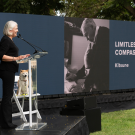
The UC Davis School of Veterinary Medicine recently launched the next phase of our Veterinary Medical Complex (VMC) expansion—in large part thanks to dedicated donors who have supported our bold vision with $110.5 million in gifts to date. This visionary campaign, termed "Limitless," reflects the school's ambition to define a new era in veterinary health.
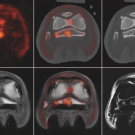
The UC Veterinary Medical Teaching Hospital opened the All Species Imaging Center, a central hub for all advanced diagnostic imaging including small animal computed tomography (CT), high field magnetic resonance imaging (MRI) for both small and large animals, positron emission tomography (PET)/CT for both small and large animals, and a dedicated large bore equine CT.
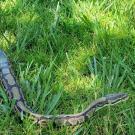
Monty, a 9-year-old male ball python, has been with owner Teena Fultz for five years. Already dubbed Monty when she received him, the snake got to keep his famous moniker as Fultz appreciated the humor behind it. They have been constant companions since.